Black Dog
Black Dog is a minor but pivotal figure in Robert Louis Stevenson's Treasure Island, a mutilated former shipmate of Billy Bones whose sudden appearance at the Admiral Benbow Inn triggers the chain of events that leads to the discovery of the treasure map. He is a pale, tallowy creature missing two fingers from his left hand, and his presence connects the old buccaneer's hidden past to the larger pirate conspiracy that drives the novel's plot.
Identity and Introduction
Black Dog first appears in the second chapter of the novel, "Black Dog Appears and Disappears," on a bitter January morning when Jim Hawkins is laying the breakfast-table at the Admiral Benbow Inn. He is described as "a pale, tallowy creature, wanting two fingers of the left hand," who wears a cutlass but does not look much like a fighter. Though not sailorly in appearance, he has "a smack of the sea about him," and his mutilated hand—which he later holds up to Billy Bones, saying "since I lost them two talons"—marks him as a veteran of the brutal world of piracy. He asks for rum and then reveals his purpose: he is seeking his "mate Bill," whom he identifies as the captain lodging at the inn, a man with a cut on one cheek and "a mighty pleasant way with him, particularly in drink."
The Confrontation with Billy Bones
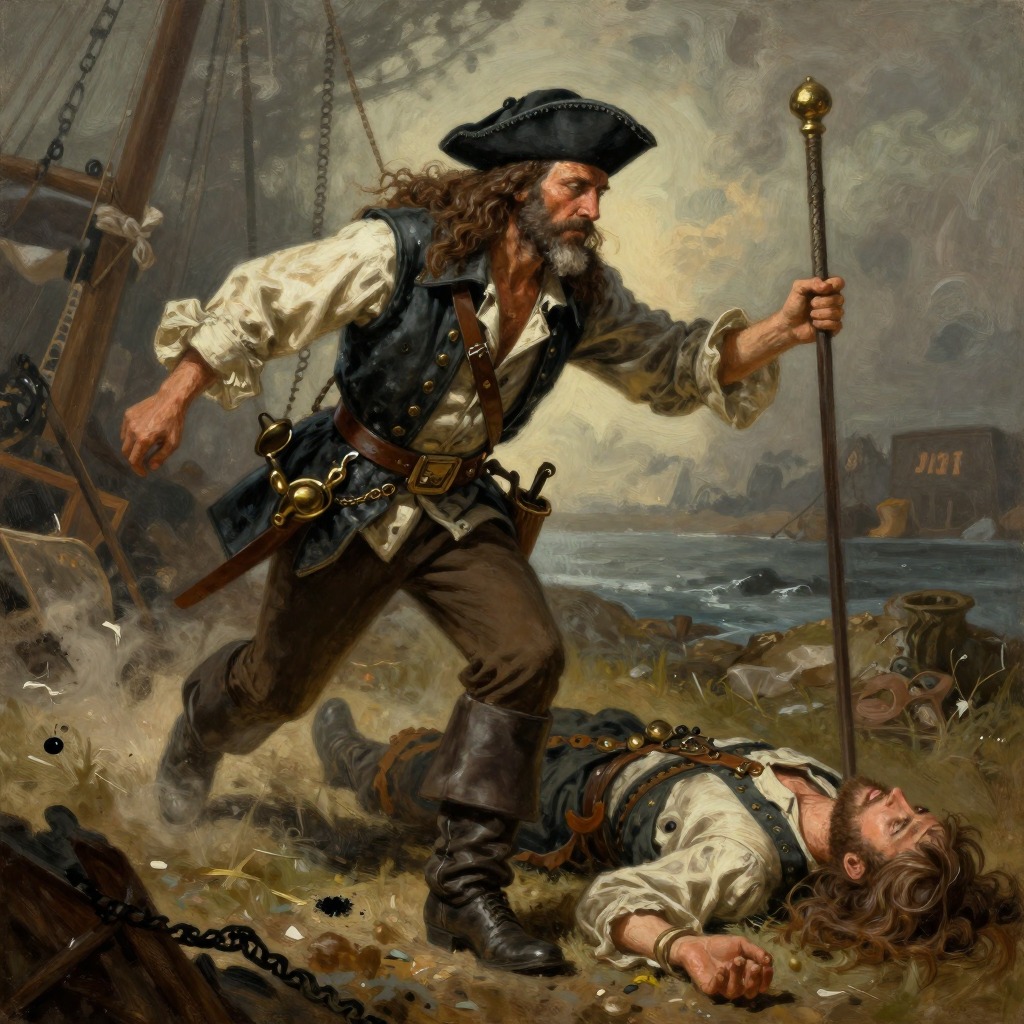
When Billy Bones returns from his morning walk, Black Dog reveals himself, and the old captain's reaction is immediate and visceral: "all the brown had gone out of his face, and even his nose was blue; he had the look of a man who sees a ghost." The two old shipmates sit down to talk over rum, but their conversation quickly turns to argument. Jim overhears fragments—"No, no, no, no; and an end of it!" and "If it comes to swinging, swing all, say I"—before a violent fight erupts. Both draw cutlasses, and Black Dog flees, streaming blood from the left shoulder, with the captain in hot pursuit. The captain's final tremendous cut is intercepted by the inn's signboard, leaving a notch that Jim notes can still be seen. Black Dog escapes over the hill, and the captain, reeling, demands rum and then collapses with a stroke.
Connection to the Pirate Conspiracy
Black Dog's appearance is not an isolated incident but part of a coordinated effort by Flint's old crew to recover the treasure map. He is later revealed to have been at the Spy-glass Tavern in Bristol, where Jim Hawkins recognizes him while delivering a note to Long John Silver. Silver, feigning ignorance, calls him "Black Dog" and claims he has seen him before with a blind beggar—whom Jim identifies as Pew. This connection establishes Black Dog as one of the network of pirates who have been tracking Billy Bones and who will later form the core of the mutiny aboard the Hispaniola. His presence at the tavern also foreshadows Silver's own double-dealing, as the cook pretends to be outraged while actually being complicit in the pirate plot.
Role in the Plot and Thematic Significance
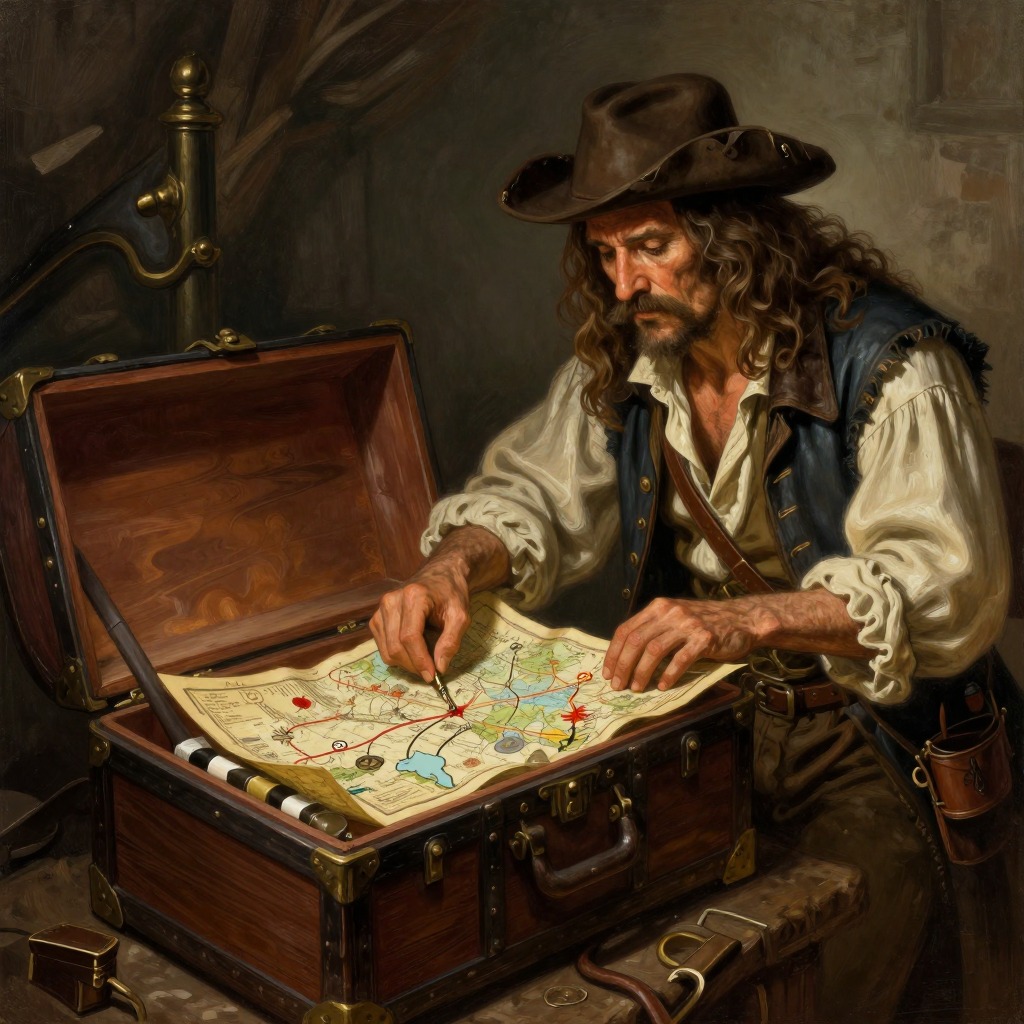
Black Dog's function in the narrative is to set the plot in motion and to embody the threat of the old pirate world that Billy Bones has tried to escape. His visit directly leads to the captain's stroke, his subsequent death, and the discovery of the treasure map in the sea-chest. He also serves as a link between the inn and the wider conspiracy, connecting the isolated Admiral Benbow to the bustling port of Bristol and the ship Hispaniola. Thematically, Black Dog represents the inescapable past: no matter how far Billy Bones retreats into a quiet coastal inn, his former comrades—marked by their mutilations and their greed—will find him. Black Dog's missing fingers, like Silver's missing leg and Pew's blindness, are physical signs of a life of violence that cannot be left behind. His brief appearances are enough to remind the reader that the treasure hunt is not merely an adventure but a reckoning with a bloody history.